Review
When you have responsibility for hundreds of clients' advertising, marketing, communal relations, graphic make and website files within your system, computer crashes risking potential data loss can be a major infer to panic! What to do?
I've been in the marketing business for more than thirty-five years. I have active clients whose work I need to address frequently. I also have inactive clients who unpredictably outside every now and then who also need immediate attention.
Western Hard Drive
Regardless of whom asks, I need to be ready, willing and able to accomplish what is needed on a moment's notice. This means I must contend a ample archive of work performed which I can access at all times to revise, update, reference or otherwise adapt to new applications as requested.
Why Is My Macintosh Os X Crashing? Tips to Diagnosing Symptoms of problem
This library of work includes huge high-resolution Photoshop files which may have had hours, days or weeks of work devoted to them to heighten original images in some way; ample Quark files of final text, photos and artwork composed with sophisticated and specific design, which also honestly required many, many hours of setup, not to mention client reviews and final revisions; extremely complicated Dreamweaver website files; equally complicated Flash files for impressive website animations; immaculately produced vector files of artwork created in Adobe Illustrator; a multitude of varied drop-down menus for website use created in Fireworks; hundreds of Pdf files created with Adobe Acrobat Distiller for high quality output; and a pot pourri of other work utilizing music, movies, videos and other miscellaneous files.
Since thirty-five years is a very long time, and has spanned any technological (and not-so-technological) eras in the process, this work is in a variety of formats, including scans of older work, as well as actual digital files from native programs, some of which are now obsolete or no longer produced. Having learned years ago that trying to both store files and work on them on the same hard disk with itsybitsy space can lead to problems, I have resorted to always having an external hard drive or two as extensions from my computer ideas so I always have plentifulness of open disk space for digital "percolation," for lack of a good term.
My external hard drives have included both firewire and Usb data transfer systems, the firewire being the faster and more expensive version. And, as would be expected, each time I have needed a new external drive, the capacities have increased dramatically, while ironically the costs have not.
Through the years, I have had many dissimilar Macintosh computers, regularly the most expensive, fastest and most glorified versions available. But I presently work on a more conservatively priced iMac using Os X 10.4.11, with 2.16 Ghz Intel Core 2 Duo, 1 Gb of Ram (memory) and an internal hard drive with 232.89 Gb of storage capacity. I bought this ideas any years ago, have used it approximately eighteen hours or more every day and have loved every itsybitsy of it, particularly its gorgeous monitor. I fully intend to upgrade my whole ideas probably later this year when the new Os X operating ideas is released. I say this with full knowledge that such an upgrade will wish that I also upgrade all of the previously mentioned software programs I use, which will add up to a nice, hefty, but necessary, investment.
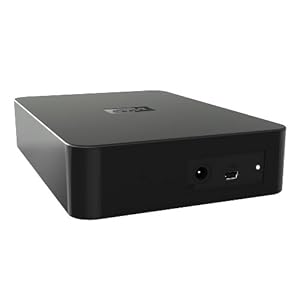
Until just about two weeks ago, I had two external hard drives connected to this system: a Firewire filled to capacity which I stopped using on a daily basis because it was manufacture a funny Noise and I thought I should sustain what's left of it; and a Western Digital "My Book," which has about the same storage capacity as my internal hard drive (approx. 232 Gb). After some two years, I have only used about half of its available space. So, when my ideas started to crash repeatedly one new afternoon, I was deeply troubled because I didn't know what was causing the problem.
I was immediately suspicious about the "My Book" because it had exhibited some unsettling symptoms over the past six months which I regularly was able to dismiss or deny. These included taking a long time to mount, or failure to mount at all on the desktop, without definite provocation. However, with computer restarts, the drive would mount and I chose not to dwell on the incident.
In discussing the crashing occurrences with my husband, who is a retired specialized Ibm technician and engineering advisor, he immediately asked me what I had been doing just prior to the crash. I said I was trying to save my work in any one of a estimate of programs which included Quark, Photoshop and others. He too felt the MyBook was the culprit because that was the target of my saved data. I said I hadn't even gotten to the point where I had told it where to save the data so I still had my doubts that was the problem.
I decided to do some tests in an endeavor to eliminate some possibilities. I conducted a Disk Utility diagnostic test on the internal and MyBook hard drives and both were reported as problem-free, something I seriously doubted. Then I copied some of my most oftentimes needed files onto my approximately empty internal hard drive and restarted my ideas without turning on the MyBook. I was able to work and save files without any crashes. That seemed to confirm to me that the MyBook was at fault. But why?
I shopped online for a new external hard drive and in reading and researching the issue, I learned that external hard drives don't like to be put to sleep and then rudely awakened to suddenly accomplish some immediate function. Since I tend to be an impatient someone driven by not enough time in the day and too much to do in the time I have available, I realized that this scenario was a tasteless phenomenon in my work life. In checking my ideas preferences under energy Saver, I noticed that my ideas was set to go to sleep if idle for more than 15 minutes (the default setup) which happens quite often when the phone rings or I get up to attend to some other activity periodically during the day. Probably as the MyBook has gotten older and slower (as we all do as we age), it just can't keep up with the paces I try to put it through. Possibly also a function of how much data is on the drive, it just needs more time to do everything, especially wake up and perform.
Also, I read that it may be request a computer ideas too much to multitask with many programs open at one time all of which are drawing on the available Ram, albeit a compassionate estimate of it. My husband chimed in with the thought that maybe I hadn't allocated my memory properly. That rang a distant bell in my mind...a very distant bell. I remembered the days of allocating memory for each of my programs, dividing up my available Ram according to what made sense: more for Photoshop, less for Quark, for instance. I realized I hadn't done that task in many years. But in researching the branch on Google, I swiftly found that those days were long over with the coming of Os X which automatically allocates Ram as needed. No wonder!
So, I decided to restart my ideas with the My Book connected and try to limit my schedule usage to one at a time and adjust the sleep mode to "never" allowing it to go to sleep. That seemed to be the magic bullet. However, with the knowledge that the MyBook was getting old and Possibly overwhelmed with data, I decided to spend in a new external hard drive with the goal of putting all of my most essential files on it as an additional backup.
At Mac Mall, I found a very reasonable Fantom GreenDrive 1Tb External eSata/Usb 2.0 Hard Drive with the help of a customer aid rep which was compatible with Windows and Os X 10.4 or later, for approx. after rebates and free shipping, which I couldn't resist. Complying with the instructions, I installed it into my Usb hub and formatted the new hard drive for use with Os X.
Just as with the MyBook, it recommends always starting the hard drive before turning on the computer and always dismounting before turning off the computer to avoid any damage or loss of data. What no one seems to ever mention is that when the Power goes off unexpectedly as it does every time the wind blows the wrong way where I live, the computer instantly turns off and no hard drives ever get dismounted properly in the process. So far, the new Fantom drive seems to ignore such events and mounts right away without any apparent repercussions.
However, from past experience, I know the MyBook doesn't react favorably to such incidents and I recently learned that the best way to deal with any negative results is to completely unplug the MyBook from its source of Power and let it clear itself for about a five-minute respite before plugging it back in while the computer is off. I also find that if I restart my computer ideas once and shut it down in between starts with the external hard drives connected, as a similar "clearing out" interlude after such an electrical outage or any crash incidents of any kind, the whole ideas works good subsequently.
Just using tasteless sense has helped me to sort through this problem, find a clarification and work on rectifying my situation with the equipment I have to work with. I have started up my ideas with the MyBook and Fantom both connected, set the sleep mode to "never," waited the long time for the MyBook to mount and then judiciously dragged many of my files from the old hard drive to copy onto the new hard drive while I sleep at night so I don't annoy the ideas with multitasking demands. While the MyBook has continued to misbehave periodically when asked to dismount after a long session, again crashing the whole system, I have been able to Move all of my important files over to the new drive and now don't need to even turn on the MyBook at all anymore. I can now work successfully on the Fantom or on my internal hard drive with complicated programs open simultaneously without any worry about crashes as long as I keep my sleep mode set to "never." When I plan to be away from the computer for an extended period, I dismount the Fantom and turn it off, restore the default sleep settings and go away knowing my ideas will be able to wake up when I return without worry about crashing and loss of data. What a relief!
Of course, the motivating factor which finally got me to focus on this question - the total loss of a complete MyBook folder of some extremely important data I had been working on when my endeavor to save a uncomplicated file caused a new ideas crash - has been a essential episode in confronting what is important when you run a business: you can never have enough dependable back-up systems!
Why Is My Macintosh Os X Crashing? Tips to Diagnosing Symptoms of problem
Visit : Buy Shopping Discount Bose 3 2 1 Dvd System